STARIS VETERINARY CLINIC
OUR MONTHLY NEWSLETTER
September 2020, Volume 3
Our training & communication channel
Welcome to our Monthly Meetup
Dear friends,
This is the third newsletter of our Clinic. It is the beginning of September, we have recently returned from our holidays, so we are in a mood to have a “lighter” newsletter.
For this reason, the topic we have picked for September, is not about purely medical problems, but about something that is equally important: Safety of your pets.
Don't Miss Out
Do you want to stay connected with our Clinic, in order to educate you, know more about our everyday procedures and solve your questions for your dog and cat health care?
Follow us on social media
Our Facebook news @starisvetclinic
Follow us @starisveterinaryclinic
Safety first for your little friends!
Why should you put a microchip to your pets?
You have probably seen several post on Facebook or other social media about an animal that went missing and his/her parents are looking for their beloved pet. In cases where the animal is marked (e.g. has a microchip) and has been registered at the Veterinary Services database, finding the animal’s parent is much easier.
But what is a microchip and how is an animal marked?
The microchip is a tiny capsule with a 15-digit number imprinted on it. This number is unique. It is inserted by injection, subcutaneously, usually behind the neck, between the two shoulderblades of the animal.
The whole process takes a few seconds. The dog or cat can then eat, play or go back to their normal routine immediately.
The microchip is usually placed in animals from 2 to 6 months (depending on the breed). However, all dogs or cats could be microchipped even later in their lives if needed.
After placement of the microchip in our clinic, the data of the animal are registered together with the contact details of its parent in the relevant register of the Veterinary Services and we issue the certificate of identification and registration of the animal.
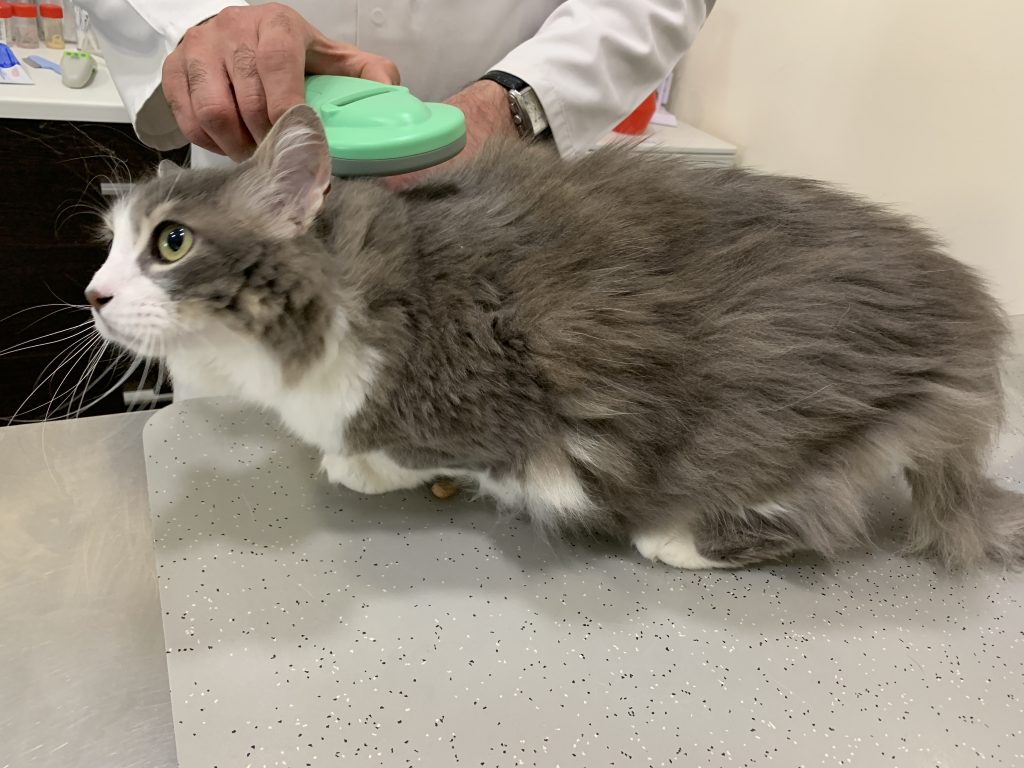
The microchip code is read by a special electronic device (scanner) available to all veterinarians. The data is accessible to all veterinarians, police, municipalities and communities.

Watch For summer Toxic Plants
Especially during summertime, we love having beautiful gardens, full with multicolored flowers. However, be aware! Many common household plants can be toxic to animals if ingested, including some beautiful summer bulbs.
Lilies are known to be one of the more dangerous plants and are particularly toxic for cats, so if you own cats, it is better to avoid them. Other summer plants that can be toxic to animals are Gladiolas, Hydrangea and Ivy.
If you see your pet having symptoms like vomiting, lethargy, drooling and seizures, your pet might have eaten a poisonous plant.
In this case you should seek veterinary advice. Take a sample of the suspected poisonous plant with you, as this will held your vet to have a better idea of what could be the problem.
How to keep your cat safe in the sun
Signs of heatstroke in cats are similar to signs in dogs, however they may be more subtle.
- Watch your pet for signs of over-heating, including heavy panting and loss of energy. If you recognise these signs, encourage your cat to drink water.
- If your cat continues to breathe rapidly, her skin is hot when you touch her or is drooling or vomiting, seek veterinary advice immediately.
- Be particularly attentive to elderly or overweight cats.
What you should do to avoid heatstroke?
- Always keep a plentiful supply of fresh, cool water in easy reach for your cat – don’t forget to put bowls both inside the house and outside in the garden
- Cats can get sunburnt, particularly pale-coloured ones. Ears, noses and areas with sparse fur are especially susceptible.
- Keep them indoors when the sun is at its strongest, between 11am and 3pm.
- Provide shade and avoid any stress
- Seek veterinary advice if your cat’s skin looks sore, crusty or scaly.
Summertime Dehydration and Your Dog
What exactly is dehydration in dogs?
Dehydration refers to a shortage of water within the body. Water represents approximately 60% of your dog’s body mass. Water is the basic component of blood, but is also present inside the cells and tissues.
As a result maintaining adequate amount of water within the body is crucial for having a dog with normal blood pressure, circulation, and bodily functions.
But what are the causes of dehydration and what are the symptoms that you can see at your pet?
Summertime Dehydration and Your Dog
Dehydration results when water consumption is less than the amount of water that is excreted from the body. For example, a dog who is sick with vomiting or diarrhea can quickly become dehydrated. Also, a dog that has a kidney disease usually has polyuria, that in shortage of water leads to dehydration.
Summertime heat also promotes dehydration, particularly when a dog doesn’t have access to lots of water. Whereas this may not be a problem in cooler temperatures, in Cyprus water loss associated with heavy summertime panting can quickly result in dehydration.
Dehydration causes a variety of symptoms and dogs may demonstrate from one to all of them. Symptoms include:
- Lethargy
- Weakness
- Difficulty in breathing
- Elevated heart rate
- Dry gums
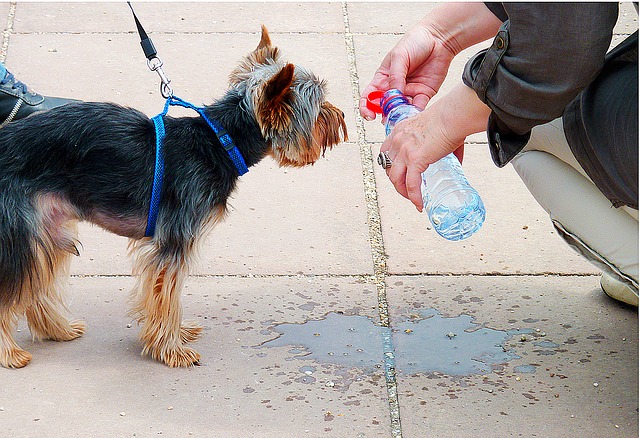
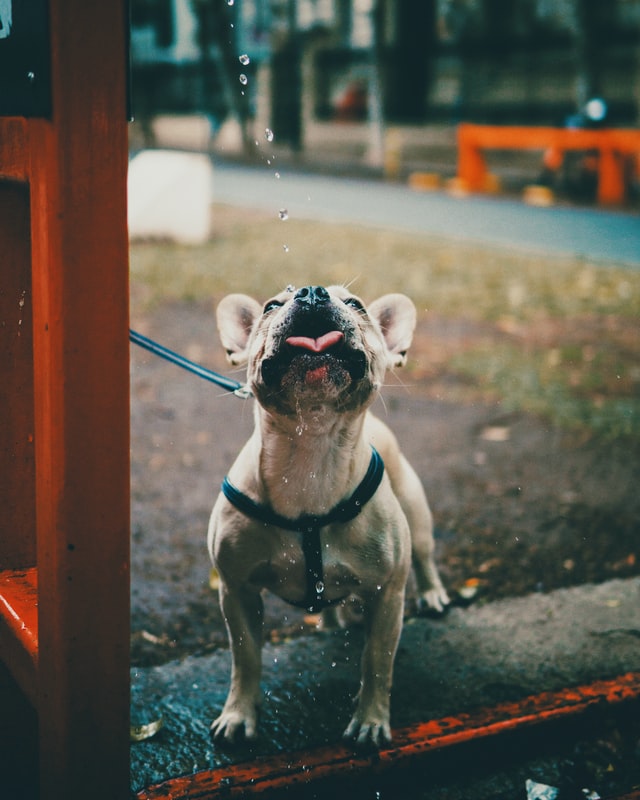
If you see these symptoms at your dog in a very hot day, find a covered area or an air conditioned environment and encourage drinking. Your dog should start feeling better within five minutes the most. If not seek out emergency veterinary care.
What you should do to prevent dehydration in your dogs:
- Avoid taking your dog for a walk when it is too hot (prefer early morning or late evening hours).
- Be sure to take with you water and a water bowl wherever you go for a long walk.
- Keep your pet in a cool area during the very hot hours (always provide for a covered area when your animal is outside, even in the less hot hours).
- Allow for plenty of rest and water breaks during play activity and exercise.
- If your dog is preoccupied with something else (other dogs, a tennis ball, etc) or too excited to drink water, it is best to terminate his/her activity in order to prevent dehydration.
All of us love to take our dogs with us everywhere, but when it is too hot, maybe it is better to leave your pet at home safety.